Editorial note: This article source-checks a TikTok clip posted by CHEK News. The clip is treated as a news lead; the rate facts below are checked against BC Hydro’s public self-generation page and the BCUC proceeding page. Customer anger is attributed as opinion, not presented as a legal finding.
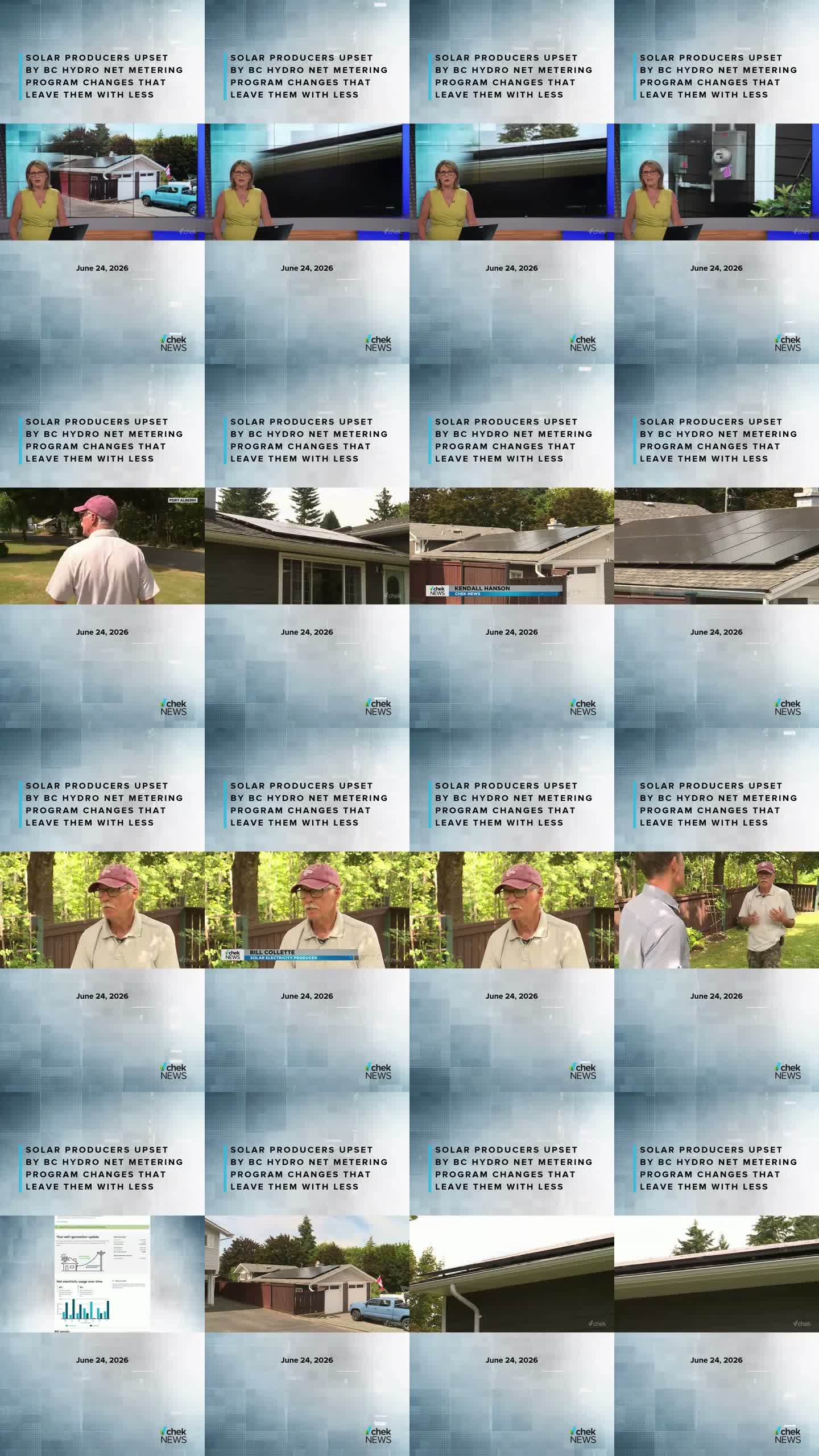
The clip says thousands of B.C. solar customers who bought panels under BC Hydro’s net metering framework may receive less value for exported power under new rules. That core claim is real. BC Hydro’s public page says the utility is closing the net metering service rate, Rate Schedule 1289, to new customers. Effective July 1, 2026, a new self-generation service rate, Rate Schedule 2289, applies.
What is confirmed
Confirmed: BC Hydro says existing customers on Rate Schedule 1289 will have 10 years from their initial net metering service start date to remain on that rate. After those 10 years, they will automatically transfer to the self-generation service rate.
Confirmed: BC Hydro describes the new export compensation as a dollar credit. Its self-generation page says that when a customer’s system produces more electricity than the customer uses, the excess earns generation credits on the bill. For each billing period, BC Hydro says the customer will be compensated at a fixed rate of 10 cents per kWh for excess electricity generated.
Confirmed: The BCUC proceeding page for “BC Hydro Net Metering Service Rates” lists the matter as completed in 2026 and describes it as BC Hydro seeking BCUC approval of proposed net metering service rates. The same BCUC page lists final order G-64-26, dated March 24, 2026.
What is disputed
The fairness question is not settled by the existence of a regulator order. The CHEK clip features Port Alberni solar electricity producer Bill Collette, who says he invested in solar under the old framework and now sees BC Hydro as pulling out of the partnership. He calls the change “pre-planned theft.” NewsForBC is not adopting that language as fact; it is an attributed expression of customer frustration.
BC Hydro’s position, as reported in the clip and reflected in the rate-change explanation, is that the old structure paid more than the utility says exported summer power is worth to the system, and that a new rate should better reflect the cost and value of electricity. Solar customers’ concern is that the change can undermine the payback assumptions they used when deciding to spend thousands of dollars on panels.
The accountability question for B.C.
If public agencies encourage households and small businesses to install clean-energy technology, the rules around payback, export value and transition periods should be easy to understand before people sign contracts. A 10-year transition is protection, but it may not match every customer’s financing or payback timeline.
NewsForBC view: B.C. should publish plain-language examples showing how the old one-for-one kWh credit, the new 10-cent credit, and future residential rates affect a typical solar household. Customers should not have to decode tariff schedules to understand whether a public clean-energy promise still works for them.
Source trail
- CHEK News TikTok clip posted by @chekmedia.
- BC Hydro: Self-generation page, rate updates and 10 cents/kWh export-credit explanation.
- BCUC proceeding: BC Hydro Net Metering Service Rates, completed 2026.
- BCUC-listed final order PDF: G-64-26, March 24, 2026 (document host may show bot protection).
- NewsForBC source note, capture summary and evidence labels.
- Retrieved TikTok transcript.